
skip to main content

Hurricane Sandy Emergency Power Restoration

Located in New Jersey

  • Capability
    • Emergency Response and Storm Restoration
  • Completion November 2012

Project Overview

In 2012, our teams immediately prepared vehicles, equipment, and manpower as Hurricane Sandy made landfall along the mid-Atlantic coast. Areas of Delaware, Maryland, New England, New Jersey, New York, North Carolina, Pennsylvania, Virginia and Washington D.C. all declared a state of emergency. The National Hurricane Center reported that Sandy resulted in approximately $65 million worth of damage. Our power restoration team helped restore power in New Jersey where 2 million homes lost power, and 346,000 homes were damaged or destroyed.

Key Highlights

Our mechanics and warehouse employees worked around the clock to make sure all equipment was in proper working order, tooled up, and ready to roll once restoration efforts began
Explore Project Details

Project Scope of Work Included:

  • 80 Pick-Up Trucks
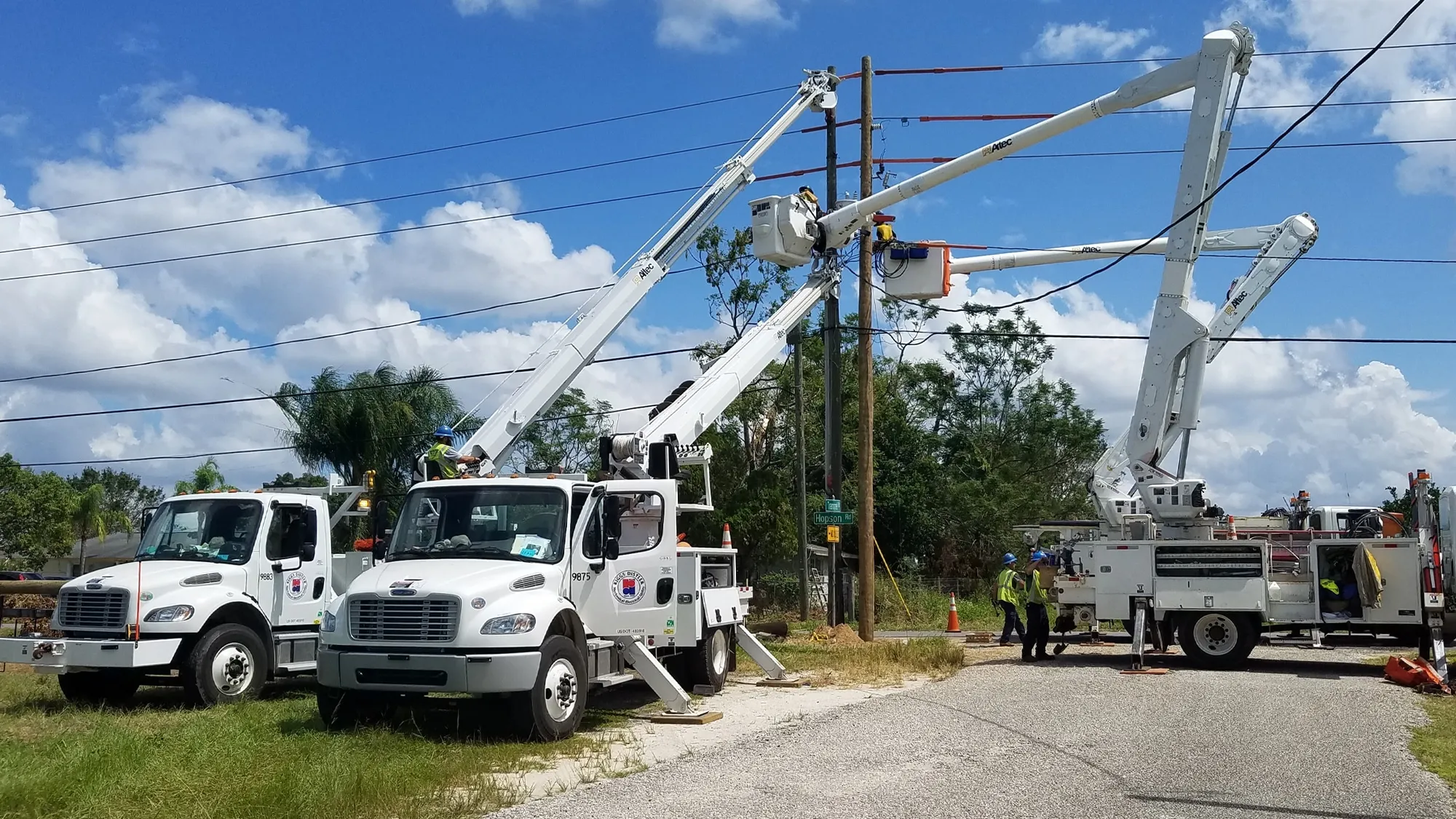
  • 160 Bucket Trucks
  • 80 Digger Derricks
  • 40 Various Specialized Vehicles: 77-inch and 105-inch Bucket Trucks, 6-by-6 Digger Derricks, Dump Trucks, Stakebody Trucks, Etc.
  • 40 Pole Trailers
  • 20 Material Trailers
  • 25 Backyard Machines (Rear Lot Access Bucket/Diggers)
  • 10 Air Compressors
  • 5 Puller and Tensioner Setups

Challenges and Results

Our teams worked 16-hour days in areas with minimal resources (60% of gas stations in New Jersey were closed) and no local lodging available. Road flooding, fallen trees, road damage, and debris from houses and landscaping created major obstacles. In fact, 90% of work areas faced some form of restriction, primarily due to flooding, which limited access, complicated travel plans, and posed safety concerns. Our team had to remove these obstacles before performing the necessary work.

We issued an all-hands call-out for the storm, mobilizing nearly 400 full-time employees from Virginia to Maine. With safety as a top priority, we deployed one safety supervisor per 20 workers, including coordinators, project managers, and superintendents. Our teams repaired circuits from 4 to 230kV, starting with high-voltage transmission lines, then restoring main distribution feeds to critical sites and homes, and finally tackling local spur lines. By coordinating with other utilities and lineworkers, we restored power to our clients’ networks and customers affected by the storm. Our ability to plan effectively, work safely, and stay organized during a state of emergency allowed us to serve both our clients and the state by restoring power to the citizens of New Jersey after one of the most violent and destructive storms on record.

Previous
Workers using bucket trucks for work on powerlines
Next
Previous Workers using bucket trucks for work on powerlines Next
Previous 0 Next

Project Overview

In 2012, our teams immediately prepared vehicles, equipment, and manpower as Hurricane Sandy made landfall along the mid-Atlantic coast. Areas of Delaware, Maryland, New England, New Jersey, New York, North Carolina, Pennsylvania, Virginia and Washington D.C. all declared a state of emergency. The National Hurricane Center reported that Sandy resulted in approximately $65 million worth of damage. Our power restoration team helped restore power in New Jersey where 2 million homes lost power, and 346,000 homes were damaged or destroyed.

Key Highlights

Our mechanics and warehouse employees worked around the clock to make sure all equipment was in proper working order, tooled up, and ready to roll once restoration efforts began

Explore Project Details

Project Scope of Work Included:

  • 80 Pick-Up Trucks
  • 160 Bucket Trucks
  • 80 Digger Derricks
  • 40 Various Specialized Vehicles: 77-inch and 105-inch Bucket Trucks, 6-by-6 Digger Derricks, Dump Trucks, Stakebody Trucks, Etc.
  • 40 Pole Trailers
  • 20 Material Trailers
  • 25 Backyard Machines (Rear Lot Access Bucket/Diggers)
  • 10 Air Compressors
  • 5 Puller and Tensioner Setups

Challenges and Results

Our teams worked 16-hour days in areas with minimal resources (60% of gas stations in New Jersey were closed) and no local lodging available. Road flooding, fallen trees, road damage, and debris from houses and landscaping created major obstacles. In fact, 90% of work areas faced some form of restriction, primarily due to flooding, which limited access, complicated travel plans, and posed safety concerns. Our team had to remove these obstacles before performing the necessary work.

We issued an all-hands call-out for the storm, mobilizing nearly 400 full-time employees from Virginia to Maine. With safety as a top priority, we deployed one safety supervisor per 20 workers, including coordinators, project managers, and superintendents. Our teams repaired circuits from 4 to 230kV, starting with high-voltage transmission lines, then restoring main distribution feeds to critical sites and homes, and finally tackling local spur lines. By coordinating with other utilities and lineworkers, we restored power to our clients’ networks and customers affected by the storm. Our ability to plan effectively, work safely, and stay organized during a state of emergency allowed us to serve both our clients and the state by restoring power to the citizens of New Jersey after one of the most violent and destructive storms on record.

Previous
Workers using bucket trucks for work on powerlines
Next
Previous Workers using bucket trucks for work on powerlines Next
Previous 0 Next